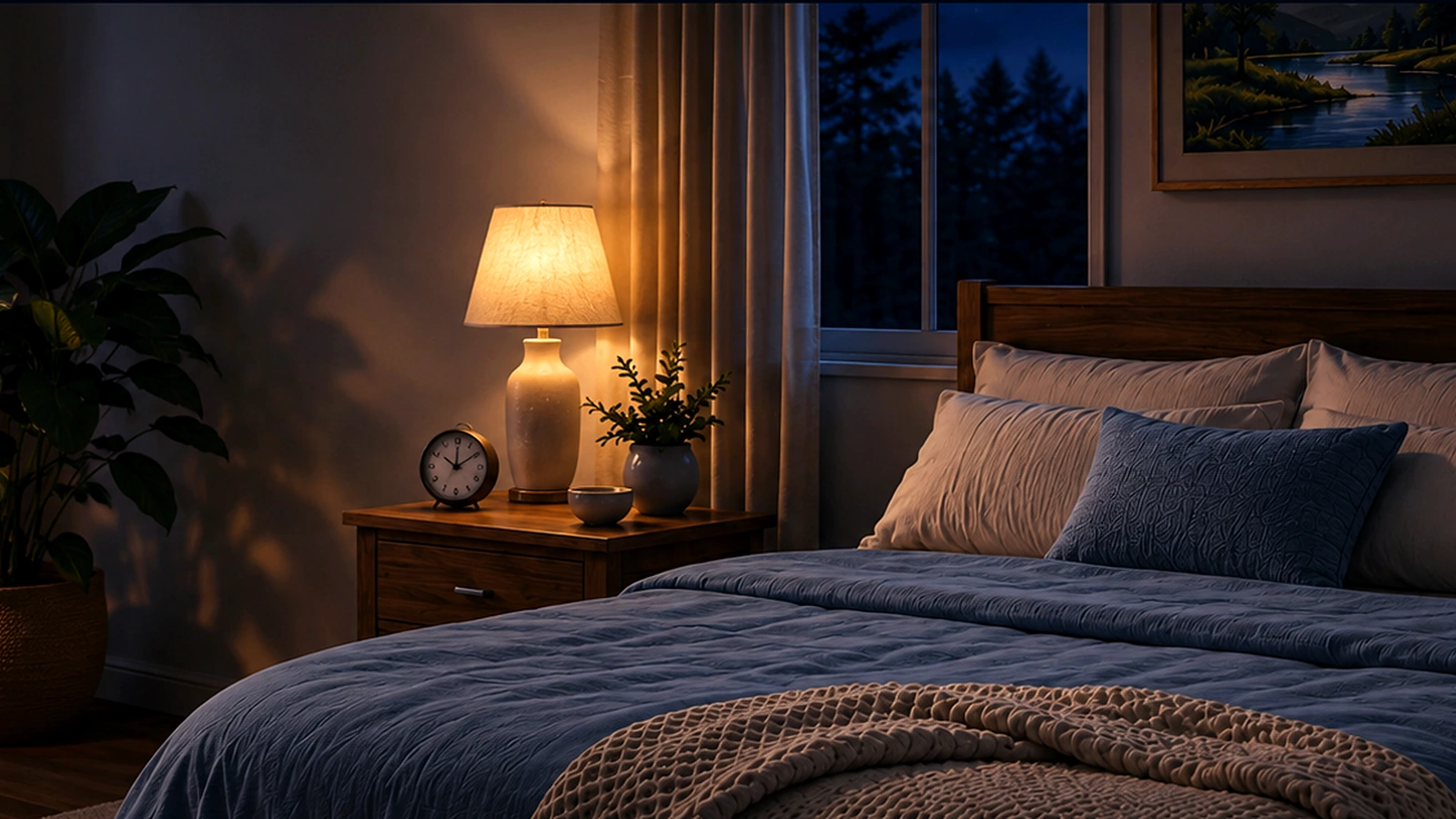
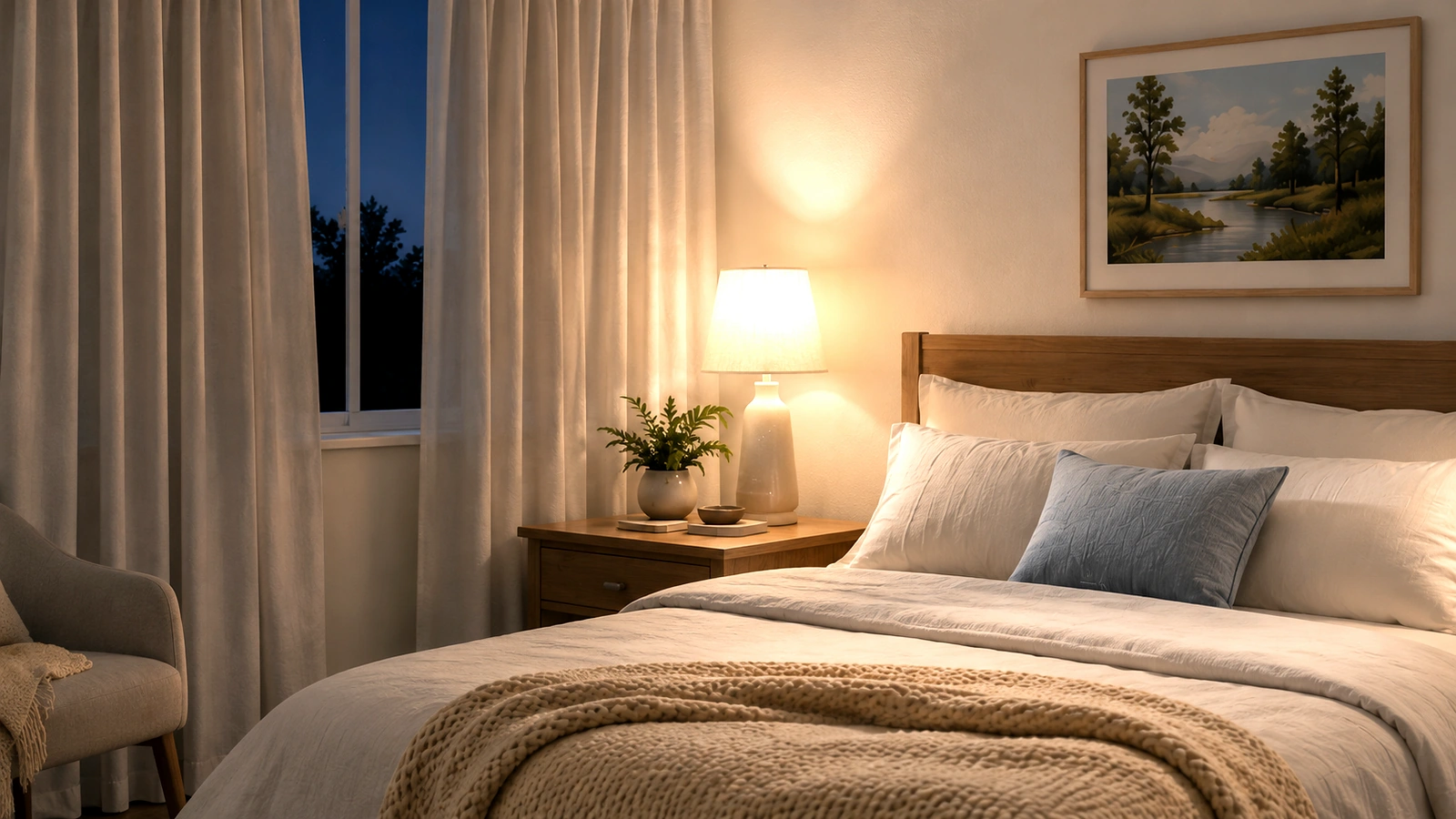
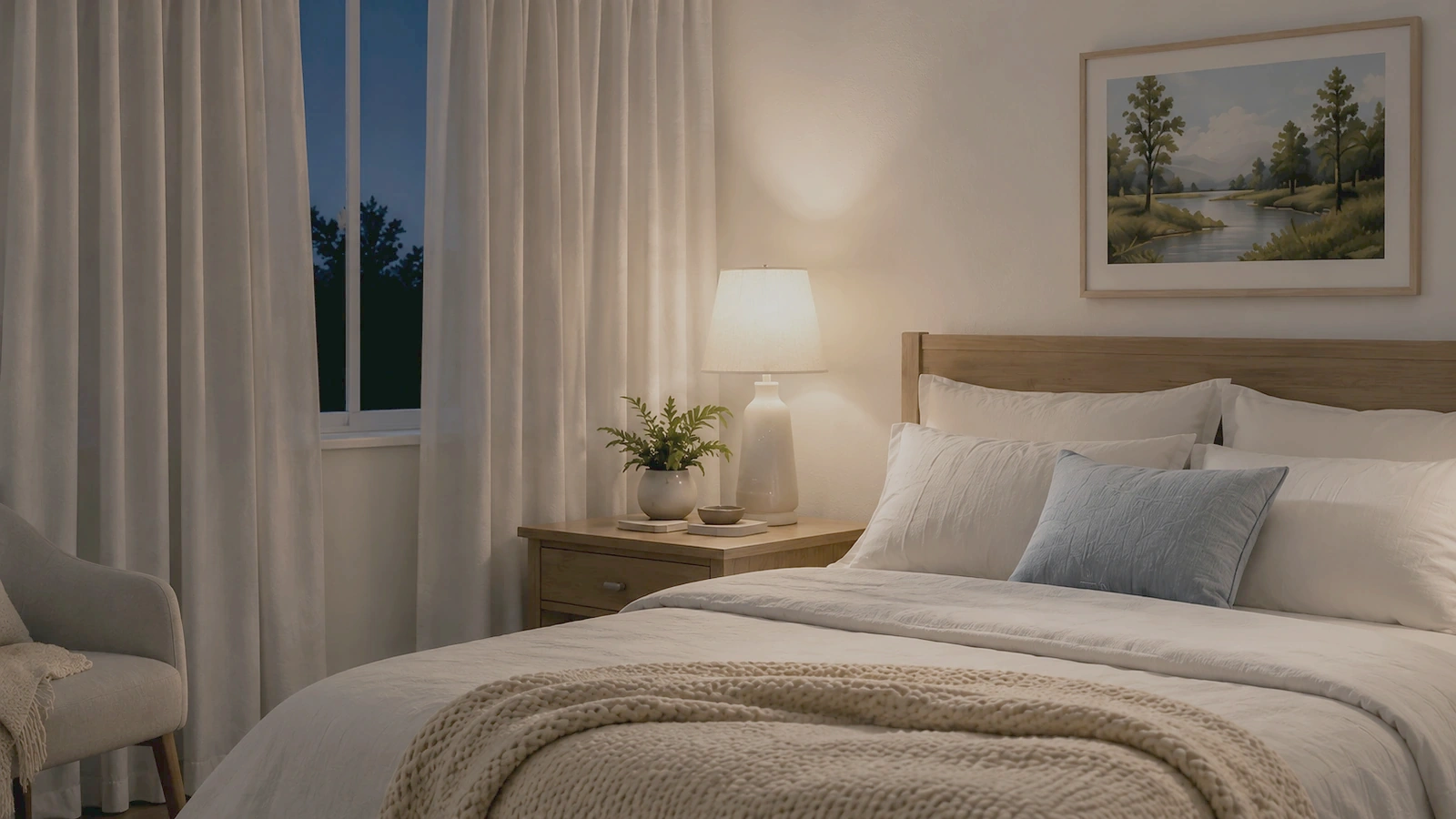
Blocking outside light and softening the lights you use before bed can make it easier to fall asleep and stay asleep.
Last reviewed: · Educational only, not medical advice.
Short answer
How do I reduce light in my bedroom at night?
Block outside light with blackout curtains, shades, or a sleep mask, lower bright overhead lights in the last hour before bed, use a low warm night-light for safe movement, and cover small glowing device lights. This page is about nighttime light — for morning daylight and body-clock timing, see the separate morning light guide.
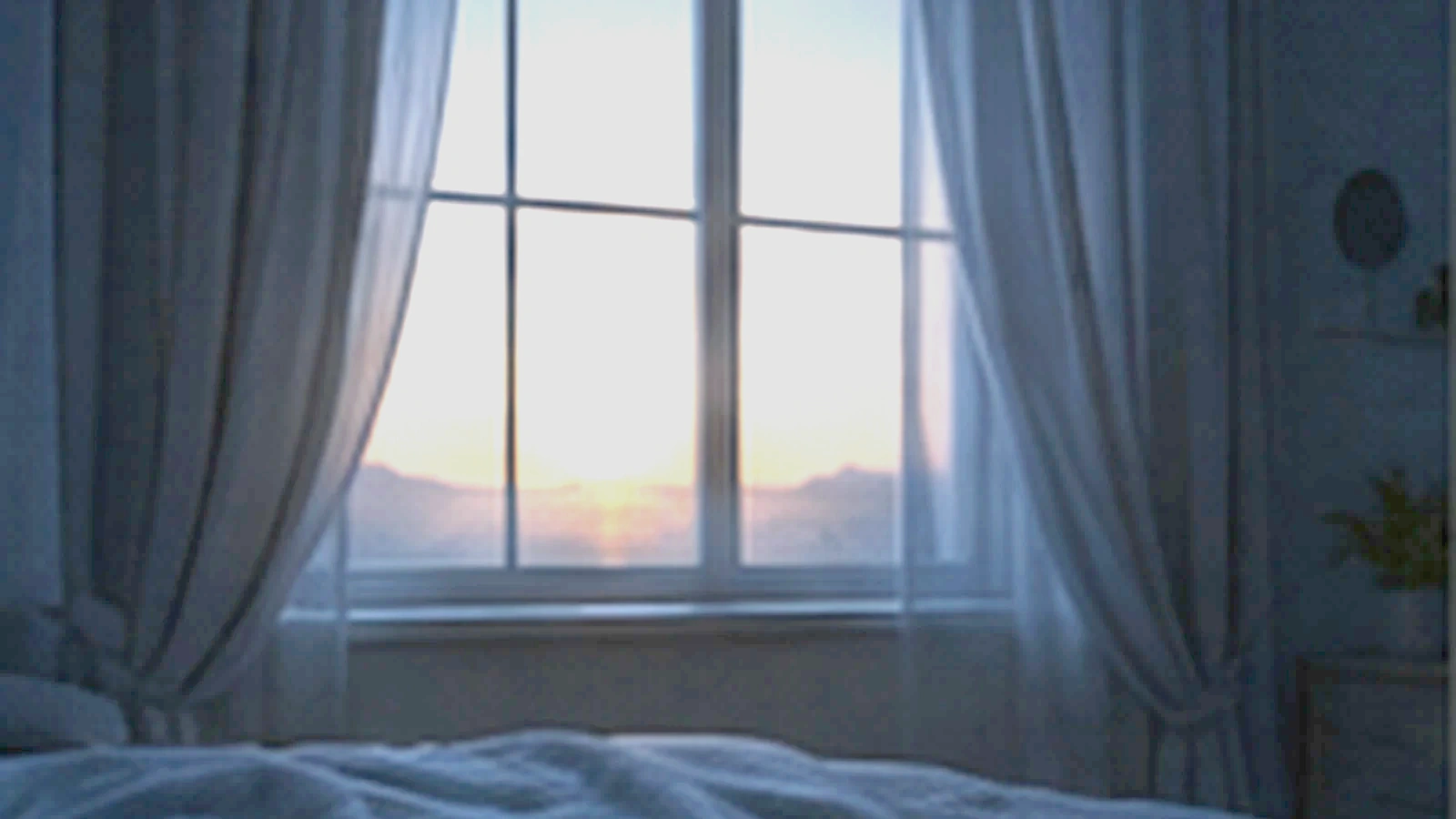
Streetlights, early sunrise, and passing headlights can all interrupt sleep. Blackout curtains or shades address the whole window; a sleep mask is a simple, portable option, especially useful while traveling.
Even good blackout curtains can leak light at the top and sides. Curtains hung wider and higher than the window frame, or a snug-fitting shade, block more light than a curtain sized to the window opening alone.
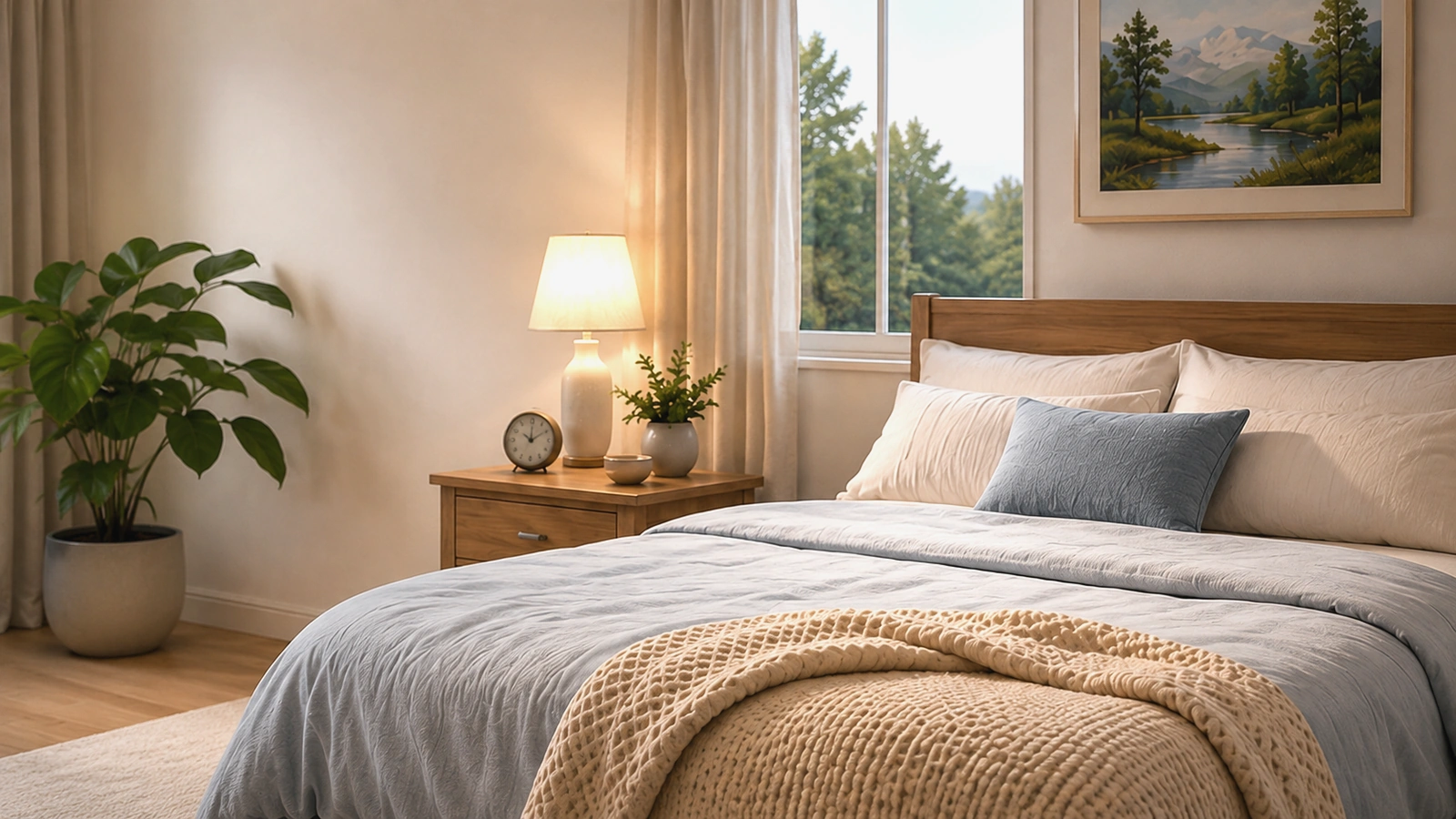
Bright overhead lighting in the last hour before bed works against a calm wind-down. A dimmer bedside lamp lets you read or get ready without the jolt of a bright ceiling light.
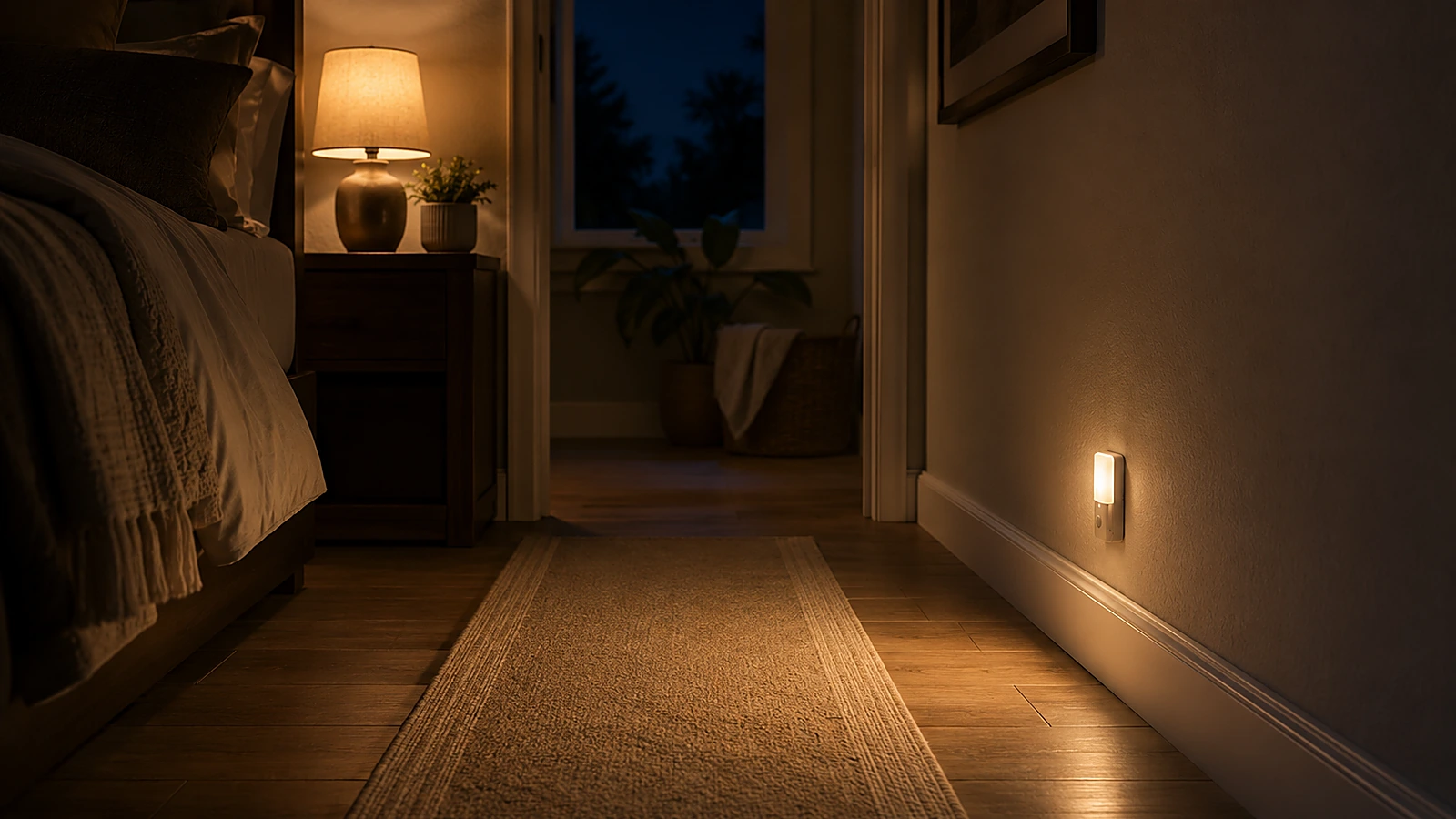
When you do need light at night, warm-toned, low light is gentler than bright white light. This applies to lamps you leave on briefly and to any night-light you use along the way to the bathroom.
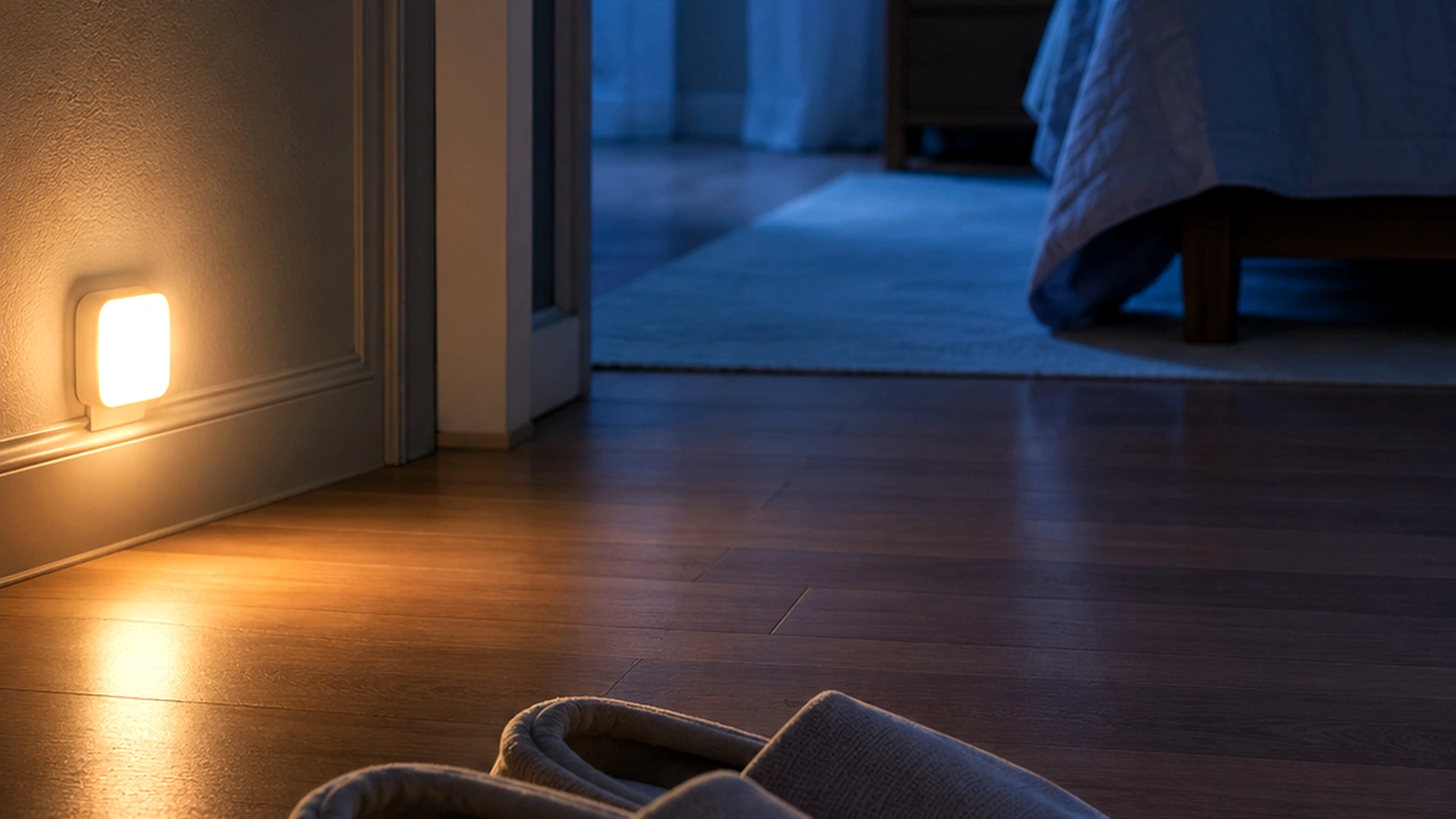
A low, warm night-light placed along the route from bed to bathroom helps you see the path without turning on bright overhead lights that can make it harder to fall back asleep. See safer nighttime routines for more on lighting the path safely.
Small glowing lights from chargers, routers, smoke detectors, or clocks can be more disruptive than they seem, especially in an otherwise dark room. Covering or turning away from these is a simple, free fix.
A few items that help many people control light at night:
Blackout curtains
Blocking street light and early sunrise.
Sleep mask
A simple way to keep light out, including while traveling.
Sunrise alarm clock
A gradual light to wake to, and large, readable numbers.
Motion or plug-in night light
A low, warm light for the path to the bathroom at night, instead of harsh overhead light.
As an Amazon Associate, RestNudge may earn from qualifying purchases. See all comfort picks and our disclosure.
Yes. Light is a strong signal to the body clock. A dark room at night helps you stay asleep, while daytime light helps you feel alert. Blackout curtains, a sleep mask, and lower evening lighting can make a noticeable difference.
No. This page is about reducing light in your bedroom at night so you sleep more soundly. See morning light and sleep timing for how daylight in the morning helps set your body clock — the opposite time of day, and a different goal.
For most people, yes, as long as you can move safely if you need to get up. A low, warm night-light along the path to the bathroom is a simple way to balance darkness with safe movement.