


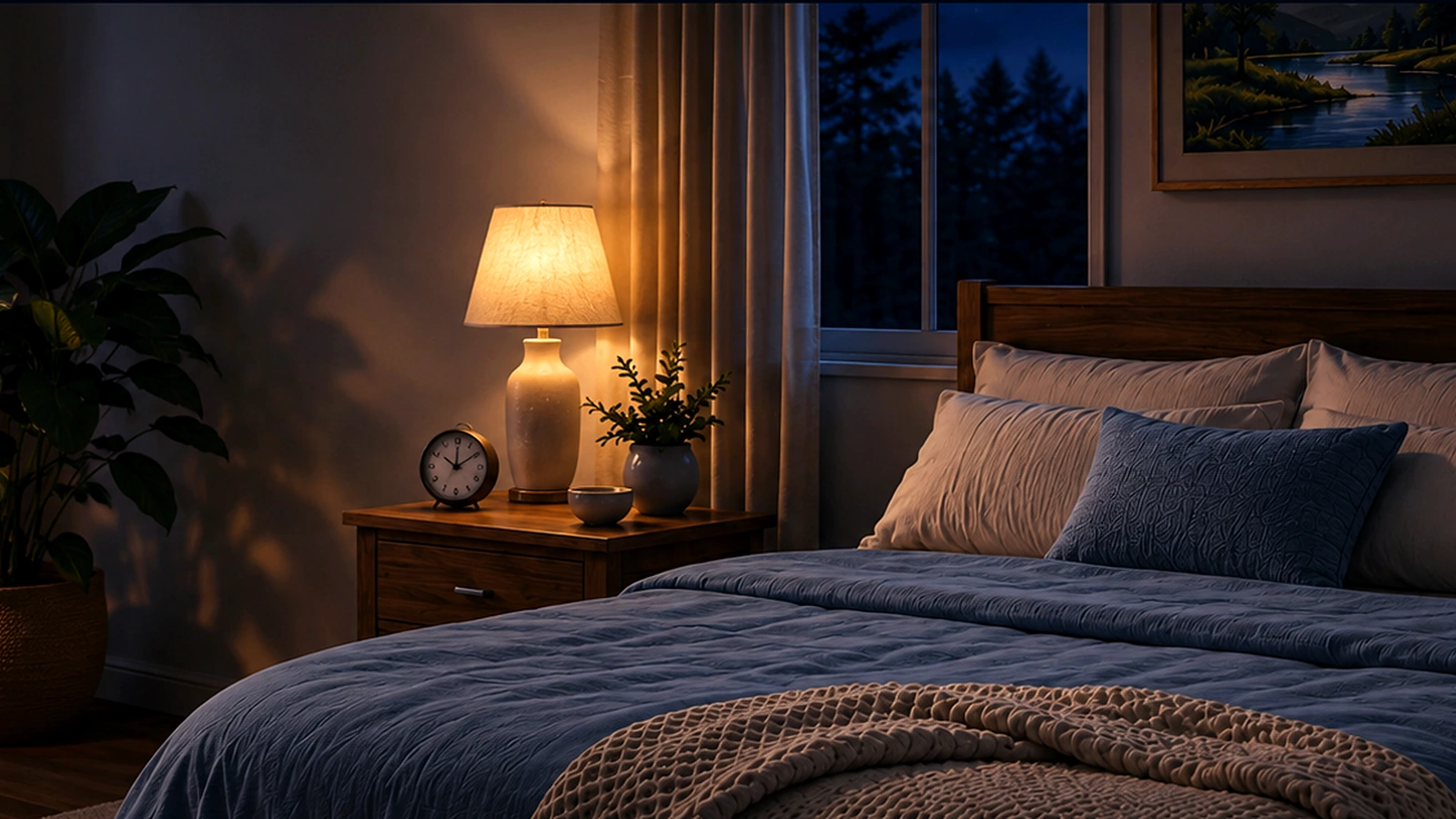
Your bedroom is one of the easiest things to improve. Four simple things shape how restful it feels — each has its own complete guide below.
Last reviewed: · Educational only, not medical advice.
Short answer
How do I make my bedroom better for sleep?
Make it cool, dark, and quiet, and keep it physically comfortable. Each of those four areas — cooling, light, sound, and physical comfort — has its own complete guide with practical steps and product guidance.

A slightly cool room with bedding you can layer suits most people. The full cooling guide covers airflow, bedding materials, mattress considerations, and a practical checklist.
Dark at night with blackout curtains or a mask, and a low, warm night-light for safe movement, help most people sleep more soundly. The full light guide covers curtains, lamps, night-lights, and device lights.
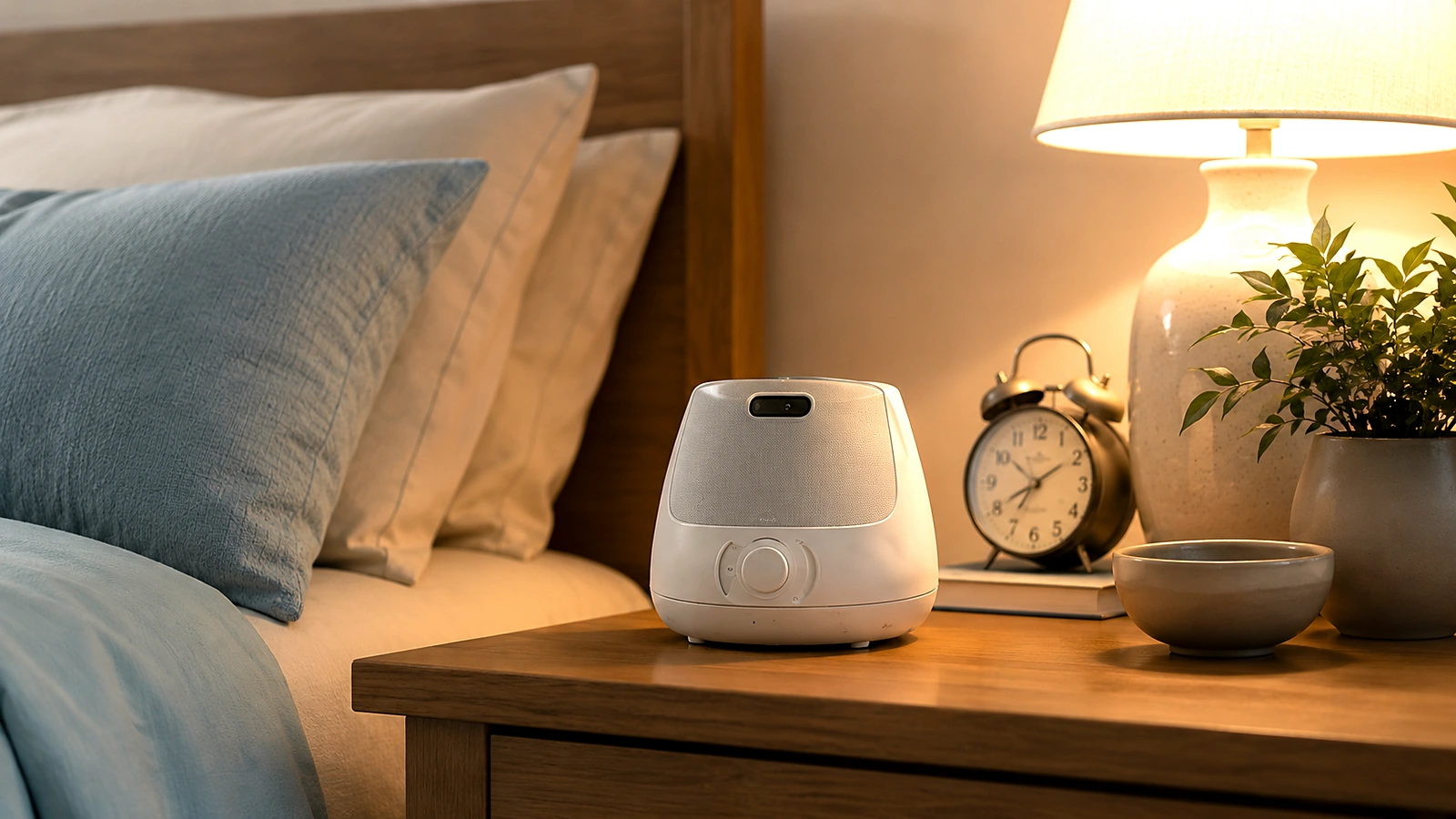
Steady, gentle sound — a fan, white-noise machine, or soft earplugs — softens sudden noises for many people. The full sound guide covers steady versus sudden noise, machines, and simple household fixes.
View comfort recommendations →
A restful room supports better sleep, but it cannot treat a sleep disorder. If loud snoring, gasping, or severe insomnia is present, comfort changes are not enough on their own — see when to talk to a doctor.
Many people sleep best in a slightly cool room. See the full cooling guide for more.
Yes. Light is a strong signal to the body clock. See the full light guide for how to reduce it at night.
For some people, yes. See the full sound guide for how steady sound can help.
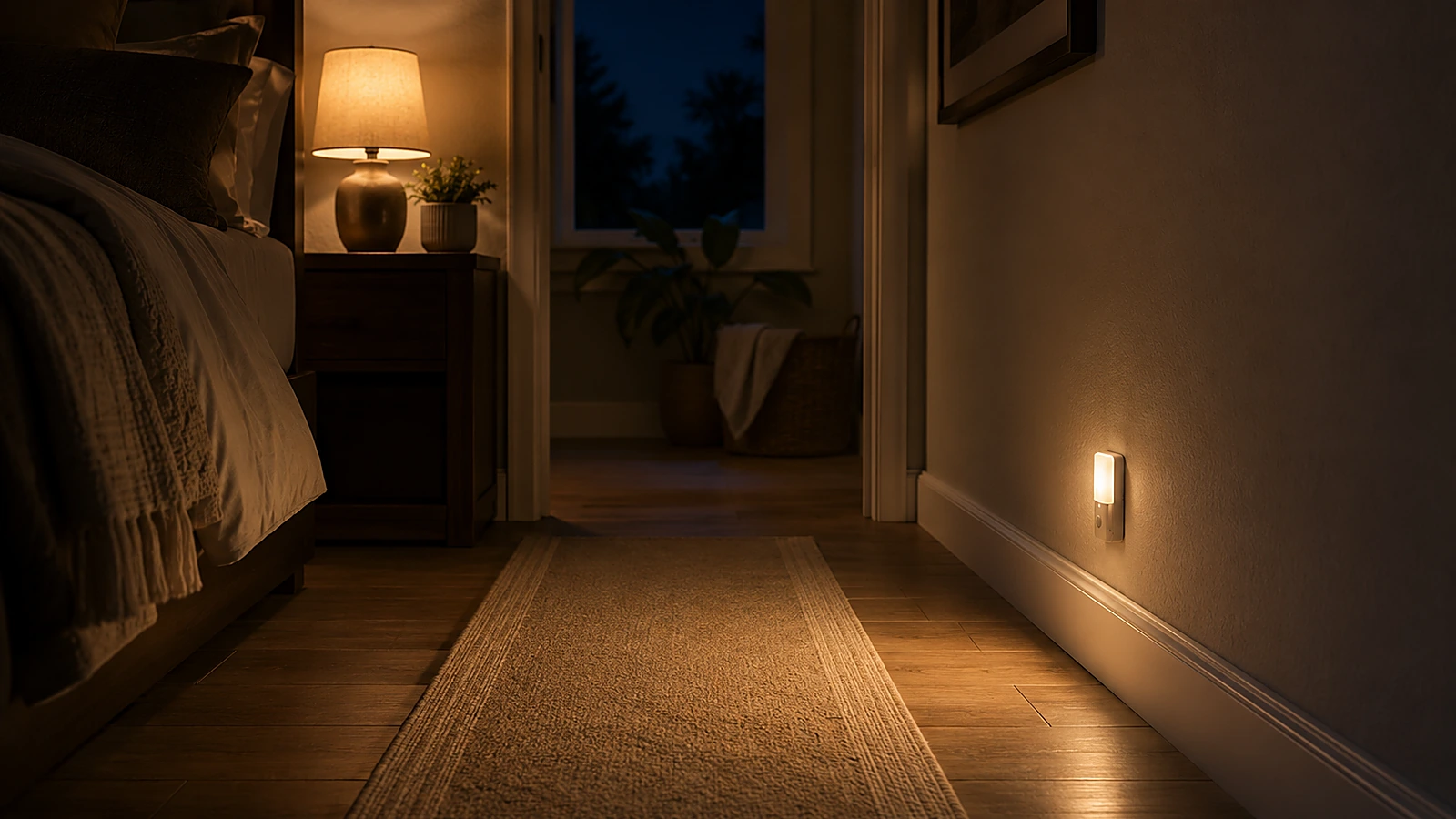
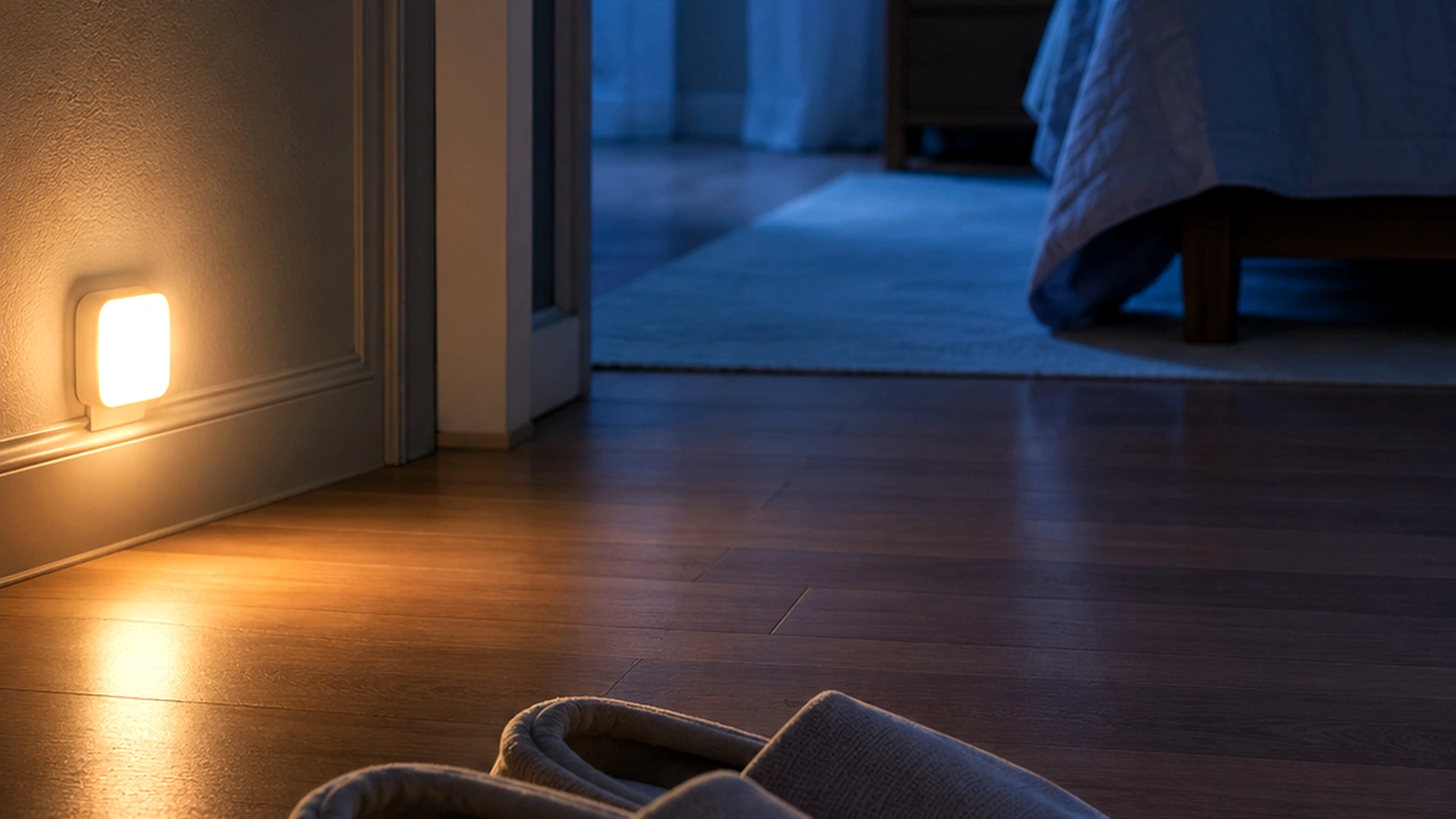


Honest, general suggestions for comfort items — what each helps with and what to look for. No prices, ratings, or fake reviews.