

Good sleep and safe nights go together. A few simple changes around the bedroom and bathroom can lower the risk of falls and make night-time movement easier.
Last reviewed: · Educational only, not medical advice.
Short answer
How do older adults make nighttime safer at home?
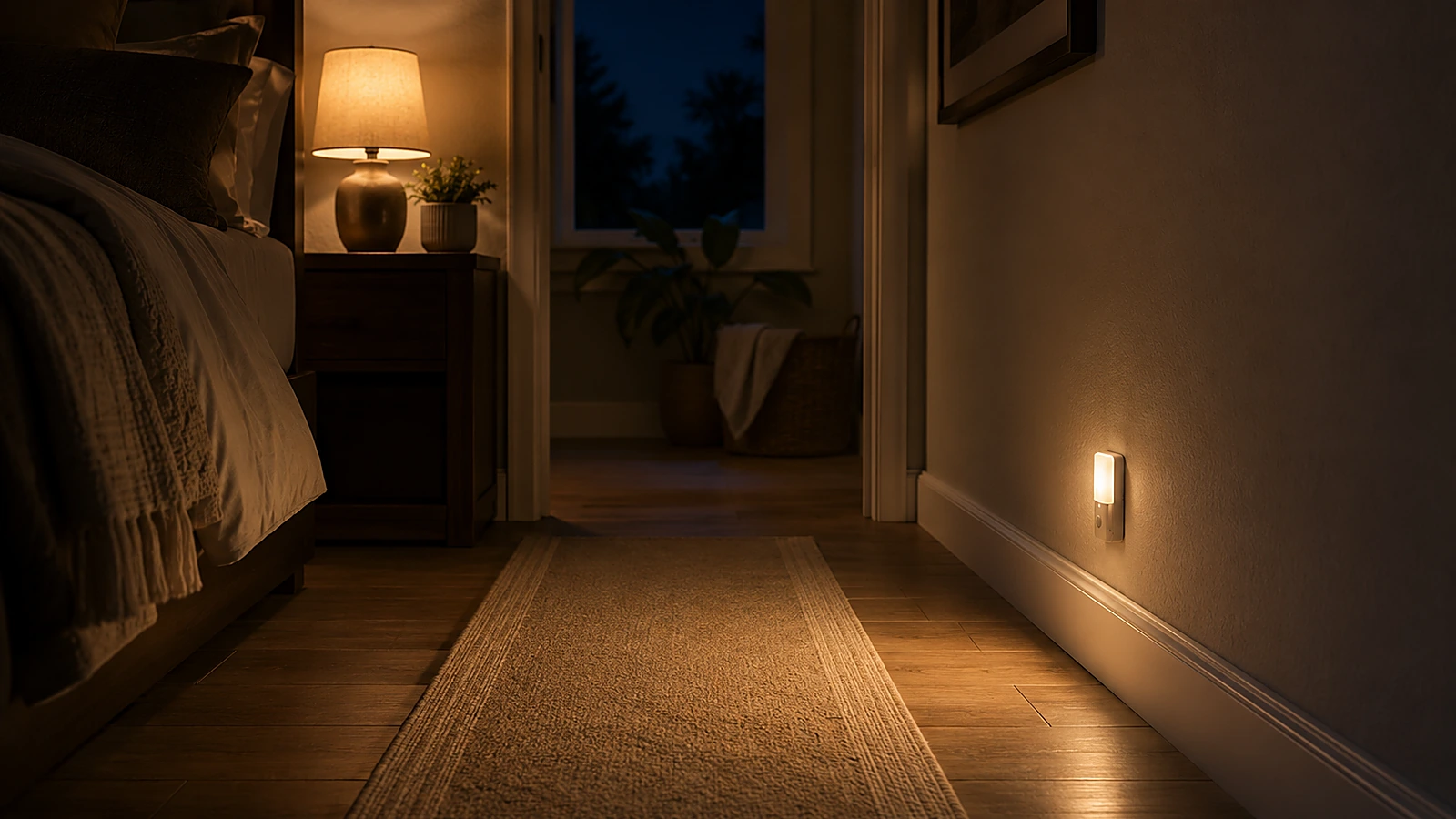
Light the route to the bathroom with low, warm night-lights, keep walkways clear, wear non-slip footwear, keep a phone within reach, and stand up slowly. These steps support safer movement at night.
A simple order to set up before bed.
Light the path
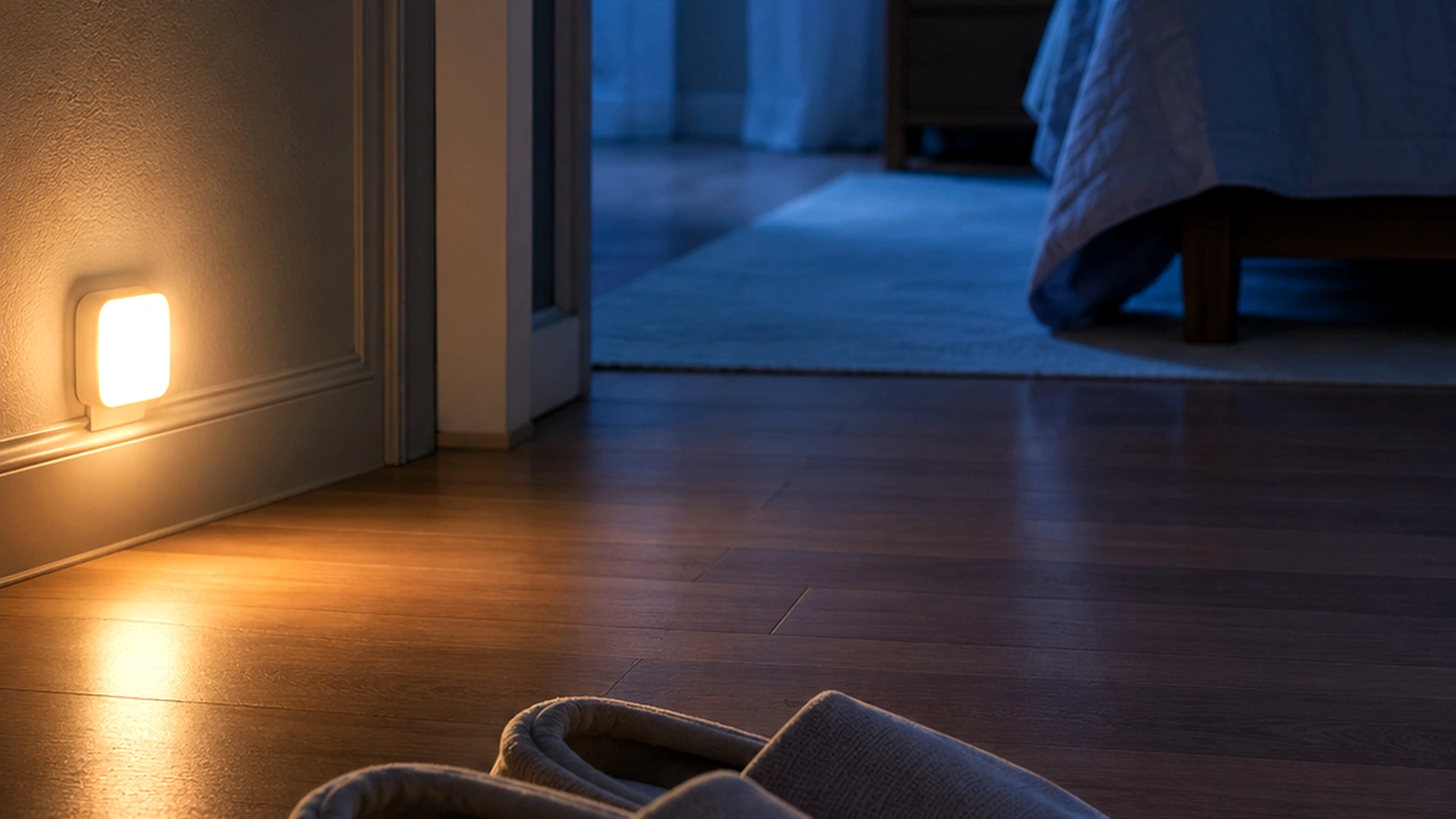
Switch on a low, warm night-light from bed to bathroom.
Clear the way
Move cords, loose rugs, and clutter out of the walkway.
Keep help close
Place a phone or alert device within easy reach of the bed.
Rise slowly
Sit, steady yourself, then stand and walk at an easy pace.
Pair these with a comfortable, calm bedroom — see Bedroom comfort.
These ideas support safer movement at night. They are general home-safety tips, not a medical assessment of your individual fall risk, balance, or medicines. No product removes the need for a clear path, good lighting, and a doctor's review of your individual risk — a night-light or similar item is a small aid, not a substitute for those.
A small aid some people find helpful alongside the steps above:
Motion or plug-in night light
A low, warm light for the path to the bathroom at night, instead of harsh overhead light.
As an Amazon Associate, RestNudge may earn from qualifying purchases. See all comfort picks and our disclosure.
Light the path with low, warm night-lights, keep walkways clear, wear non-slip footwear, keep a phone within reach, and stand up slowly. These small steps lower the risk of falls in the dark.
Dizziness when standing or walking can have many causes, and RestNudge can't determine yours. If you feel dizzy or unsteady when standing or walking, or if you have fallen, talk with a doctor — a doctor or pharmacist can review medicines and health factors that may affect balance or fall risk. In the meantime, rising slowly and steadying yourself first can help you move more safely.
Occasional trips are common, but frequent night-time urination can disrupt sleep and has many possible causes. It is worth mentioning to your doctor.
RestNudge's fall-safety wording follows general guidance from the National Institute on Aging (NIA/NIH) and the CDC's older-adult fall-prevention resources. It is general home-safety information, not a diagnosis or treatment plan, and RestNudge has no medical reviewers. For dizziness, unsteadiness, falls, or concerns about how a medicine affects balance, talk with a doctor or pharmacist.